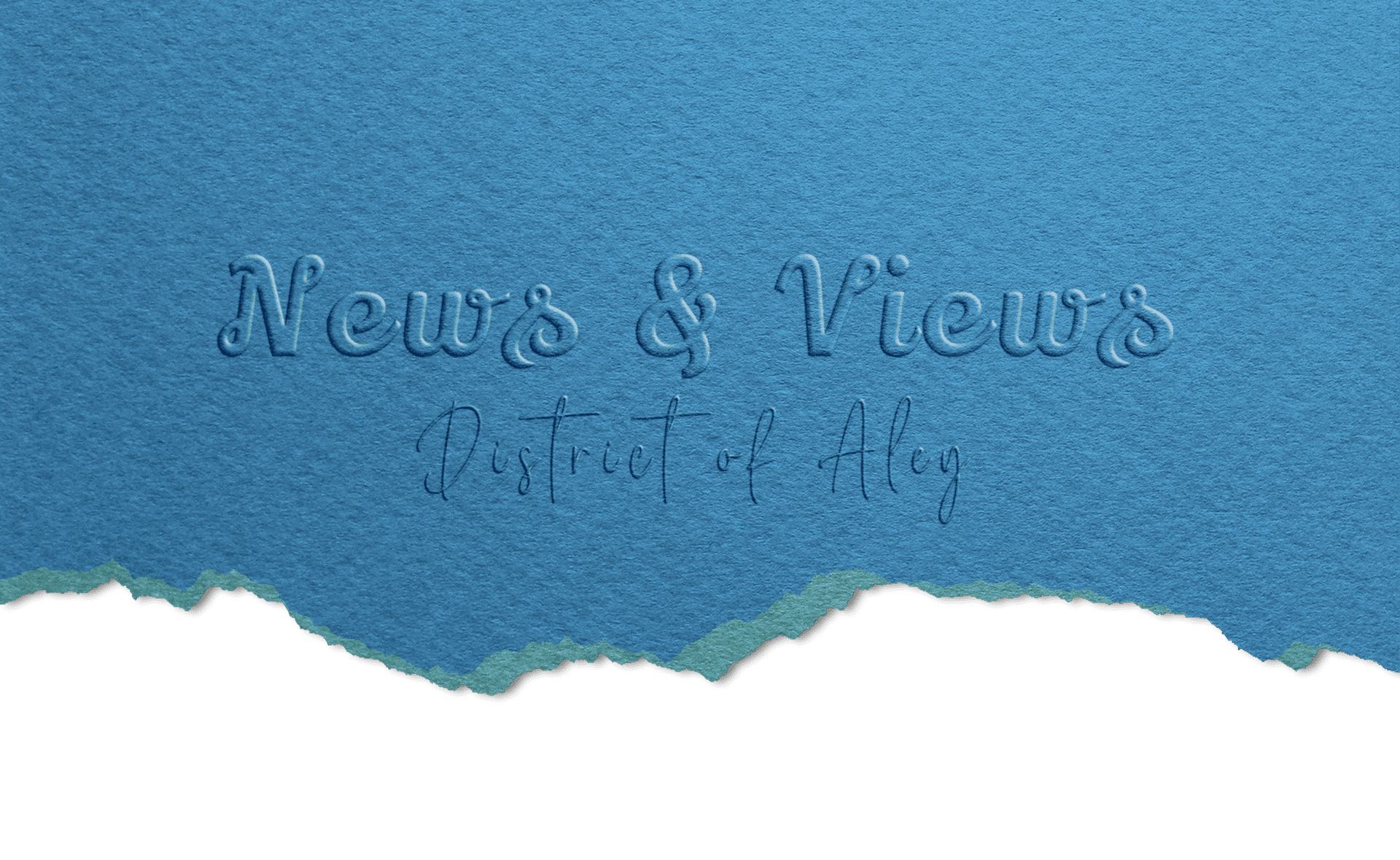
Member of the Democratic Gathering Akram Chehayeb said in his speech: On the small balcony overlooking the road at the beginning of the western neighborhood, he was sitting wearing his beautiful Turkish tarboosh and his loose Arab dress, creating an aura of goodness and love around him that every passerby on that road could sense.
He added, Abu Melhem, son of Aley, studied and taught at the National University School in Aley, interacted with the people of his town, loved them and we loved him, an educator, a social reformer, a sophisticated artist and a poet. He wrote critical social poems in a beautiful sarcastic style and published them in Al-Baidar magazine, then collected in a book under the title (Abou Melhem’s Zajaliyat). He was a fighter in his own way, he did not resort to anything but moral methods to achieve his goals of struggle, and he only expressed himself in honorable ways. He was a patriot of excellence, his concern was the prevalence of good over evil, and adopting dialogue as an alternative to unity. Therefore, his TV episodes were in black and white, with no room for grayness. It was either right or wrong, and often right triumphed through reconciliation and settlement. Abu Melhem became a special program, even a school, in conducting reconciliations and ending disputes according to what the public interest requires and what the moral compass indicates. He was assisted in this by Umm Melhem, the intelligent, cultured, and well-mannered woman who was always the main heroine in every appearance. Her concern was to help Abu Melhem issue his judgments and draw his attention to all the mines planted in his path so that he could avoid them and reach his goals without falling into pitfalls and stumbling blocks.
Chehayeb continued, Abu Melhem has become a school and a model for the people who care most about the survival of this country with its unique experience based on diversity, dialogue, coexistence and acceptance of others.
He added, Abu Melhem, the owner of a pure heart and mind, lived through the beautiful days and the days of cruelty, and his belief in the one country remained unchanged and unaltered. He lived with the people, sensing their problems, hearing their pains, and drawing up ways to address them in “Good Morning” on the radio and “Good Evening” on the television. You listen to and watch these episodes today and discover that nothing has changed. Yesterday’s concerns are today’s concerns, only more difficult and complex. I wish Abu Melhem had remained alive to contribute with his high national spirit and beautiful style in motivating officials to adopt dialogue to solve what we are in. Perhaps we will thus reach the election of a president for the republic who unites and does not divide, a reformer who enhances security and fortifies the judiciary, who restores life to the state’s administrations and with it the economy returns to its cycle.
In the presence of this church, Chehayeb remembered Father Elias, the town’s priest for Christians and Druze, and Father George Massouh, the cultured, loving, humble man, for their generosity to the Aley family, which gathered today with family and friends to honor “Abu Ziad and Umm Ziad,” the silver screen duo, the two stars who still shine in the sky of Lebanon.
Chehayeb hopes that we will build a theater in Aley that bears the honoree’s name.














 العربية
  English (UK)